
David Keene, Colin Forde and Becky Kearney highlight the role physios play in delivering successful orthopaedic trauma trials across the NHS

Driving research forward together
Large orthopaedic trauma rehabilitation trials may begin with research questions and funding applications, but their success depends on what happens in clinical services every day.
Across several multicentre trials in orthopaedic trauma rehabilitation, funded by the National Institute for Health and Care Research (NIHR), clinical physiotherapists are playing a central role by helping to make research deliverable in real-world NHS settings.
Physiotherapists are often involved long before a patient is recruited. During development of an intervention set to be evaluated in a trial, clinicians contribute through workshops, helping research teams design rehabilitation programmes that are practical across different services and patient groups. During early testing in real-world settings, physios identify challenges and help refine the intervention before a national rollout.
Once a trial opens, frontline staff are essential to success. Physiotherapists support patient recruitment by helping to identify and approach potential participants, and by discussing the trial in ways that help patients understand what participation involves. Delivering rehabilitation interventions within trials also requires considerable clinical reasoning. Physiotherapists attend training, learn standardised trial protocols and deliver interventions in line with research manuals, while still adapting treatment to individual patient needs. Alongside intervention delivery, clinicians collect outcome data and treatment records to support consistent delivery across sites.
This work usually takes place alongside already demanding clinical workloads. Time and resource pressures remain one of the biggest challenges in physiotherapy research. Yet across studies, physiotherapists consistently show a strong commitment to improving the evidence base for future patients. Successful trial delivery depends on continual problem-solving at site level, adapting around staffing pressures, coordinating follow-up appointments, supporting colleagues new to the study and finding practical solutions when things change.
Case study: INITIATE hip fracture trial
While the CSP standards have helped improve hip fracture rehabilitation, uncertainty remains about the optimum frequency and duration of acute inpatient rehabilitation. The INITIATE cluster randomised controlled trial compares usual care rehabilitation with a ward-based mobility intervention for people aged 60 years or over following hip fracture surgery. Recruiting 2,310 participants from 22 NHS hospitals - half of which deliver the intervention - it is the largest trial of inpatient trauma rehabilitation to date.
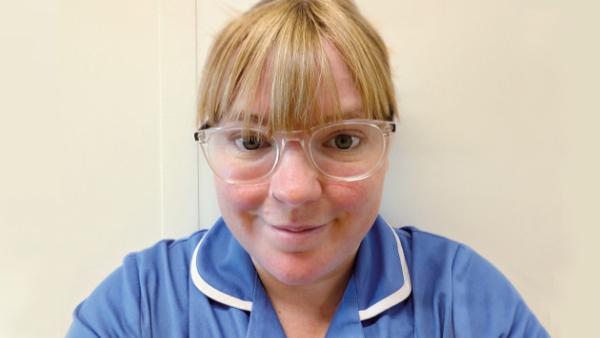
In INITIATE, a band 5 physiotherapist and band 4 therapy assistant deliver the mobility-focused intervention. It involves patient education, wider team education and the offer of at least one additional rehab session over and above usual care each day on the acute hip fracture ward. INITIATE therapists record trial data, and in some sites also identify, approach and obtain informed consent.
For Zara Cole, an INITIATE therapy assistant at the Countess of Chester Hospital, the additional rehabilitation sessions have focused on functional activities tailored to participants’ goals, helping improve mobility and confidence. Regular communication and collaboration with the wider ward-based team has been essential to completing these extra rehabilitation sessions alongside other trial activities, such as staff training and data entry. Support from her INITIATE colleague, physiotherapist Anaya Liptrot, and from the wider trial team has helped her gain confidence in contributing directly to trial delivery.
For Alex Kilcran, a newly registered band 5 physiotherapist at George Eliot Hospital, the INITIATE trial required a lot of learning at pace. As part of a site with a smaller research team, Alex confirmed eligibility, obtained consent, recorded data and delivered the intervention. The greatest benefit for his clinical practice has been gaining a deeper understanding of the entire hip fracture care pathway and how each element can affect what he can do as a physiotherapist. Within the trauma and orthopaedic therapy team, INITIATE has prompted increased reflection on how the service could be improved, including development of a dataset for audit and analysis, and has supported a business case for increased therapy staffing.
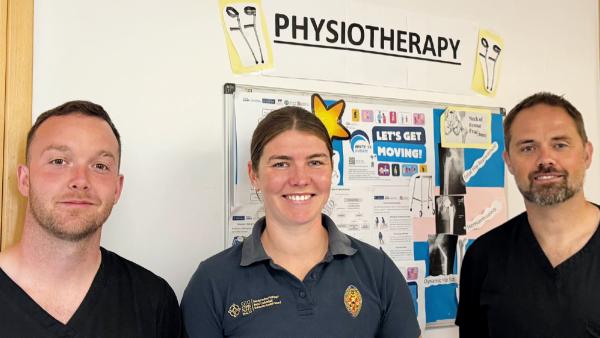
Sion Quinn, principal investigator and clinical specialist physiotherapist at Ysbyty Gwynedd Hospital, feels that participating in INITIATE has already led to local service-level improvements. There has been a culture shift on the acute trauma ward towards earlier, more intensive rehabilitation and a home-first approach, reducing reliance on community rehabilitation beds. Becoming a principal investigator has also extended Sion’s scope of practice and given him the opportunity to contribute to research with the potential to make a real-world difference. There are benefits for the wider therapy team too, with opportunities to become associate principal investigators and gain research qualifications, preparing them to become the principal investigators of the future.
From trials to practice: why this matters for patients and services
For trial interventions to be adopted in practice, they must be developed with stakeholders and designed to work across different services and patient populations. Translating an effective clinical trial intervention into consistent, evidence-based care is multifaceted and requires more than publication alone.
For example, the ARTISAN randomised controlled trial demonstrated that a usual course of physiotherapy after shoulder dislocation was not superior to a single session of advice and support materials. Knowledge mobilisation initially progressed through traditional academic routes, including publication of the results paper in a journal and presentation at national and international conferences. However, these approaches alone are not enough to embed findings into routine care.
To support implementation, a dedicated website was developed so physios could download the materials and localise them (see references below). A further step was taken with a national specialist society, the British Elbow and Shoulder Society, to translate the evidence base to form part of newly established national guidelines. Together, these strategies ensure wide dissemination and reach across different stakeholder groups.
Getting involved in trials
If you are interested in learning more about physio trauma research, dedicated CSP networks, such as the Association of Trauma and Orthopaedic Chartered Physiotherapists, have research leads that you can contact. Trauma and physiotherapy conferences are another great opportunity to network with researchers, such as the CSP Annual Conference.
Step into research
At CSP Conference in Glasgow on 19-20 October, we have a speed networking session planned for early career researchers to meet and ask questions of experienced, specialist researchers and academics from across the UK.
The NIHR website also publishes recently funded research awards if you want updates on what’s new and upcoming. Additionally, if you want to take things a step further and begin training to understand the research process better, there are freely available courses hosted by NIHR, such as ‘Good Clinical Practice’.
Next steps: developing a clinical academic career
For physiotherapists interested in taking the next step into research, there are growing opportunities to develop a clinical academic career.

Colin Forde is a trauma rehabilitation researcher at the Kadoorie Institute for Trauma, Emergency and Critical Care, University of Oxford; and an extended scope practitioner physiotherapist at Oxford University Hospitals NHS Trust.
Rebecca Kearney is a physiotherapist; and professor and director of Bristol Trials Centre,University of Bristol.
David Keene is the Kadoorie Professor of Trauma Rehabilitation at the Kadoorie Institute for Trauma, Emergency and Critical Care, University of Oxford; and a clinical specialist physiotherapist and extended scope practitioner at Royal United Hospitals Bath NHS Trust.
The NIHR Academy offers structured clinical academic pathways, including internships, fellowships and project grants to support training and career development at different stages. Many physiotherapists involved in trauma trials have accessed this type of support, alongside methodological guidance from NIHR Research Support Services, to help develop research ideas and funding applications.
The NIHR ‘Starting Out’ resources also provide practical guidance for clinicians wanting to become involved in research.
As orthopaedic trauma research continues to expand, physiotherapists across all grades are helping to shape the future of rehabilitation through their day-to-day clinical expertise, commitment and innovation. Together, the profession is advancing the evidence base and ensuring that future care is grounded in both science and real-world clinical practice.
References:
The BMJ (2024) publication of the ARTISAN randomised controlled trial results.
You can also access and download all of the ARTISAN trial’s documents and materials from the University of Warwick’s clinical trials unit.
AFTER: Effectiveness of supervised versus self-directed rehabilitation for adults aged 50 years and over with ankle fractures: protocol for the AFTER trial.
WISE: Progressive resistance and flexibility exercises versus usual care advice for improving pain and function after distal. radius fracture in adults aged 50 years or over : protocol for the WISE randomized superiority trial.
REACH:Randomised Evaluation of rehabilitation after ACute proximal Humerus fracture (the REACH trial).
INITIATE: Increased mobility in hospital after hip fracture.
BESS Guidance:British Elbow and Shoulder Society practice guidelines: Rehabilitation following traumatic anterior shoulder dislocation (post-operative and non-operative care).
Research Support Service:The RSS supports researchers at any stage of their career to develop competitive funding applications for health, public health and social care research.
NIHR: Starting Out:Starting out guide - why and how to get involved in research.
NIHR: funded studies: Search for and analyse information on NIHR supported activity in health and care research, including expenditure and research findings.
Oxford Trauma Evidence Website:Explore research evidence in musculoskeletal trauma from the University of Oxford
NIHR-funded trauma trials
Some of the recent NIHR-funded multicentre randomised controlled trials include AFTER (ankle fracture rehabilitation) WISE (wrist fracture rehabilitation), REACH (proximal humerus fracture rehabilitation), ARTISAN (shoulder dislocation rehabilitation) and INITIATE (hip fracture rehabilitation). This year’s CSP Conference in Glasgow will include sessions on the findings and clinical implications of the AFTER and WISE trials by Prof David Keene and the ARTISAN trial by Prof Rebecca Kearney and colleagues. INITIATE and REACH will feature in the Research Spotlight session focused on current large-scale research projects. Find our more information on NIHR-funded trauma trial results from the team at the Kadoorie Institute at the University of Oxford, and access the infographics, explainer animations, links to the main publications and other resources to support using the evidence in practice.
Find out more
Number of subscribers: 1